Connect with us

Blogs

Koffing Pokémon Guide: Evolution, Moves, Stats, and Best Battle Strategies

Published

on

koffing

Introduction

Koffing is one of the most recognizable Poison-type Pokémon introduced in the first generation of the Pokémon franchise. Known for its floating spherical body, skull-and-crossbones markings, and ability to emit toxic gases, Koffing has remained a memorable character among Pokémon fans for decades. Whether encountered in the original Game Boy titles, modern Pokémon games, animated series, trading card collections, or Pokémon GO, Koffing continues to attract trainers interested in its unique design and battle potential. Despite its relatively simple appearance, Koffing possesses an intriguing background, useful abilities, and an important evolutionary path that make it much more than just another Poison-type creature.

Since its debut in the Kanto region, Koffing has established itself as a staple Pokémon associated with Team Rocket, especially through James in the Pokémon anime. Its mischievous personality and ability to withstand attacks have made it popular among casual fans and competitive players alike. In this complete guide, we will explore Koffing’s origins, evolution, stats, abilities, moves, weaknesses, Pokémon GO performance, and interesting facts that every trainer should know.

What Is Koffing?

Koffing is a Poison-type Pokémon introduced in Generation I. According to the Pokédex, Koffing stores several kinds of toxic gases within its body and can increase their concentration to create powerful explosions when threatened. Its appearance resembles a floating purple orb covered in crater-like bumps and marked with a distinctive skull and crossbones symbol, emphasizing its poisonous nature.

Koffing’s design reflects environmental themes and industrial pollution, which were common inspirations during the early development of Pokémon. It thrives in places where toxic fumes and polluted air are present, making abandoned factories and industrial zones suitable habitats in various Pokémon games. This creative concept has helped Koffing stand out among the original 151 Pokémon and remain instantly recognizable to generations of players.

Koffing Evolution Explained

Koffing evolves into Weezing starting at Level 35 in most mainline Pokémon games. This evolution significantly improves its defensive capabilities and grants access to stronger moves. Weezing retains Koffing’s Poison typing while enhancing its overall battle effectiveness, making it a valuable addition to many teams.

In certain regions, such as Galar, Weezing takes on a unique regional form known as Galarian Weezing. This version gains the Fairy typing alongside Poison, introducing new strategies and resistances. Trainers who plan their teams carefully can take advantage of these variations to maximize their effectiveness in battles.

The evolutionary line is straightforward:

  • Koffing
  • Weezing (Level 35)
  • Galarian Weezing (Regional Variant)

This simple progression makes Koffing an excellent choice for beginner trainers looking to understand Pokémon evolution mechanics while still enjoying meaningful upgrades.

Koffing Stats and Abilities

Koffing possesses balanced defensive statistics that allow it to absorb damage effectively during the early stages of gameplay. While it is not known for exceptional Speed or Attack, its defensive utility makes it useful in prolonged encounters.

Key attributes include:

  • Type: Poison
  • Height: 0.6 meters
  • Weight: 1.0 kilograms
  • National Pokédex Number: #109
  • Ability: Levitate (in many games)
  • Hidden Ability: Stench (depending on game versions)

Levitate is particularly valuable because it grants immunity to Ground-type attacks, one of Poison-type Pokémon’s greatest weaknesses. This ability provides Koffing with additional survivability and strategic flexibility, especially when facing opponents that rely on Earthquake or similar moves.

Best Koffing Moves

Choosing the right moves can dramatically improve Koffing’s usefulness in battle. While move availability varies by generation, several attacks consistently perform well across games.

Popular moves include:

  • Sludge Bomb
  • Toxic
  • Smokescreen
  • Clear Smog
  • Assurance
  • Self-Destruct
  • Tackle
  • Belch
  • Venoshock

Sludge Bomb remains one of Koffing’s strongest offensive options due to its power and chance to poison opponents. Toxic is ideal for stalling strategies, gradually wearing down enemies over time. Meanwhile, Self-Destruct serves as a risky but effective finishing move that reflects Koffing’s lore involving explosive toxic gases.

Players participating in competitive formats often combine status-inducing moves with defensive tactics, allowing Koffing or Weezing to outlast opponents while steadily dealing damage.

Koffing in Pokémon GO

Koffing has also become a familiar sight in Pokémon GO, where players can encounter it during events, special research tasks, and wild spawns. Its shiny variant, featuring a slightly different coloration, remains highly sought after by collectors.

In Pokémon GO, trainers often prioritize:

  • Finding shiny Koffing.
  • Collecting candies for evolution.
  • Participating in event encounters.
  • Building a complete Pokédex.
  • Using Koffing in themed battle leagues.

Although Koffing is not considered a top-tier competitive choice in Pokémon GO, it remains popular due to nostalgia and its connection to the original Kanto Pokémon roster. Events featuring Team Rocket frequently increase Koffing’s visibility, encouraging players to add it to their collections.

Koffing Weaknesses and Resistances

Understanding Koffing’s weaknesses is essential for successful battles. As a Poison-type Pokémon, Koffing traditionally struggles against Psychic and Ground-type attacks. However, Levitate eliminates Ground-type damage in games where the ability is active, leaving Psychic attacks as a primary concern.

Weaknesses:

  • Psychic

Resistances:

  • Fighting
  • Poison
  • Grass
  • Bug
  • Fairy

These resistances allow Koffing to perform well against several common Pokémon types. Trainers who utilize switching strategies can take advantage of these defensive benefits to maintain momentum during difficult encounters.

Interesting Facts About Koffing

Koffing has accumulated numerous interesting details throughout Pokémon history. It was one of the original 151 Pokémon introduced in 1996 and quickly became associated with Team Rocket in the anime. James’s Koffing eventually evolved into Weezing, becoming one of the franchise’s most recognizable companions.

Additionally, Koffing’s Japanese name, “Dogars,” is believed to reference poisonous gases. Its body contains multiple toxic compounds, and Pokédex entries frequently mention its tendency to expand by mixing gases internally. Some entries even state that Koffing smells unpleasant when temperatures rise, adding further personality to this unusual Pokémon.

Its continued appearances in games, merchandise, and animated adaptations demonstrate its enduring popularity. Even after several generations of new Pokémon, Koffing remains a beloved symbol of the franchise’s early years.

Why Koffing Remains Popular

Koffing’s popularity stems from a combination of nostalgia, distinctive design, and consistent appearances across Pokémon media. Unlike many Pokémon that fade into obscurity, Koffing benefits from strong associations with iconic characters and memorable moments in the anime. Its simplistic yet effective design has aged remarkably well, appealing to both longtime fans and newcomers discovering Pokémon for the first time.

Furthermore, Koffing represents the creativity of Generation I Pokémon design. By transforming environmental pollution into a fictional creature with personality and strategic value, Game Freak demonstrated its ability to turn ordinary concepts into enduring cultural icons. As Pokémon continues to evolve, Koffing serves as a reminder of the franchise’s humble beginnings and its remarkable journey over the past three decades.

Conclusion

Koffing may not be the strongest Pokémon in competitive play, but it remains one of the most iconic Poison-types ever created. From its origins in the Kanto region to its appearances in Pokémon GO and modern titles, Koffing continues to captivate trainers with its unique design, toxic abilities, and memorable evolution into Weezing. Whether you’re completing your Pokédex, building a nostalgic team, or simply learning more about Generation I Pokémon, Koffing offers a fascinating blend of history, strategy, and charm that ensures its place in Pokémon history for years to come.

Frequently Asked Questions (FAQ)

1. What type is Koffing?

Koffing is a Poison-type Pokémon introduced in Generation I.

2. When does Koffing evolve?

Koffing evolves into Weezing at Level 35 in most Pokémon games.

3. What is Koffing’s Pokédex number?

Koffing is National Pokédex number 109.

4. Is Koffing good in Pokémon GO?

Koffing is more popular for collecting and nostalgia than for competitive play, though it remains useful during certain events.

5. What are Koffing’s weaknesses?

Koffing is primarily weak to Psychic-type attacks. In games where it has Levitate, it is immune to Ground-type moves.

6. Can Koffing be shiny?

Yes, Koffing has a shiny variant available in several Pokémon games and Pokémon GO.

7. What abilities does Koffing have?

Koffing commonly has Levitate and may have Stench depending on the game version.

8. Why is Koffing associated with Team Rocket?

Koffing became famous through James’s companion Pokémon in the Pokémon anime, making it closely associated with Team Rocket.

Continue Reading

Blogs

Anne Hathaway: Career, Iconic Roles, On-Screen Style, and Public Image

Published

on

Anne Hathaway

Anne Hathaway is one of the most recognizable American actresses of her generation, known for her versatility, memorable performances, and ability to move between romantic comedies, dramatic films, musicals, and major Hollywood productions. From her breakthrough performance in The Princess Diaries to her Academy Award-winning role in Les Misérables, Hathaway has developed a career that extends far beyond the image of a young actress playing a fairytale princess. Her filmography includes characters with different personalities, professional backgrounds, emotional struggles, and personal ambitions, demonstrating her willingness to explore a wide range of stories. Searches for Anne Hathaway’s on-screen appearances often reflect curiosity about her film roles, fashion, and more mature performances, making it important to understand the difference between scenes created for a particular production and material circulated without proper context. Examining her career through the lens of acting, filmmaking, and public image provides a more complete picture of the performer and the choices that have shaped her reputation.

Anne Hathaway’s journey from young actress to Hollywood star

Anne Hathaway was born on November 12, 1982, in Brooklyn, New York, and began developing her interest in performance at an early age. Her early television work helped introduce her to audiences, but her breakthrough arrived with the 2001 Disney film The Princess Diaries. In the movie, she played Mia Thermopolis, an ordinary teenager who discovers that she is the heir to a European throne. The role introduced Hathaway to a broad audience and established her as a recognizable young performer. The film’s appeal came from its combination of humor, family relationships, personal growth, and the familiar fairytale idea of an unexpected transformation. Hathaway’s performance gave Mia a relatable personality, allowing viewers to connect with the character’s awkwardness, uncertainty, and gradual confidence. Although the film helped establish an early public image associated with family entertainment, it also provided the foundation for a career that would later include challenging dramatic roles and sophisticated adult characters.

As Hathaway’s career progressed, she began accepting projects that differed substantially from her early family-oriented work. Her performances in films such as Brokeback Mountain and Havoc demonstrated a willingness to explore more complex material, while The Devil Wears Prada introduced her to another major audience. In the latter film, she played Andy Sachs, an aspiring journalist who takes a job at a demanding fashion magazine. The character’s professional development, changing wardrobe, and complicated relationship with ambition made the film particularly memorable. Hathaway’s performance balanced humor with the pressures of working in a competitive environment, while the production’s costumes and visual presentation became central to its identity. This period demonstrated that she could move beyond the expectations created by her earliest roles and build a career around characters with different motivations and experiences.

Understanding Anne Hathaway’s mature film roles

Hathaway’s transition into mature roles is an important part of understanding her career. Actors regularly take on characters whose experiences, relationships, and circumstances differ from their own, and films may include romantic situations, emotional vulnerability, or scenes involving partial nudity when these elements serve the story. Such appearances should be understood within the context of the production, including the character’s circumstances, the director’s intentions, and the film’s overall themes. Hathaway’s work in Brokeback Mountain, Havoc, and Love & Other Drugs illustrates how her performances have extended beyond the family-friendly image associated with her earliest success. These films belong to different genres and explore different subjects, so their content should not be treated as interchangeable or reduced to a single physical characteristic. For readers researching mature scenes in Hathaway’s filmography, the most informative approach is to identify the specific production, understand the role she played, and consult legitimate film descriptions and age ratings.

It is also important to distinguish between an actor’s professional performance and the way individual images may circulate online. A still photograph from a film, a promotional image, an editorial fashion photograph, and an altered image can have very different origins and meanings. Search results do not always make those distinctions clear, particularly when sensational descriptions are used to attract attention. A responsible article should avoid presenting unverified images as authentic, implying that a photograph comes from a particular production without evidence, or treating a performer’s professional work as permission to distribute private material. Context matters because images can be cropped, edited, miscaptioned, or separated from the story in which they originally appeared. For readers, checking the original film, official promotional materials, or reputable entertainment publications is a more dependable way to establish what an image actually represents.

The significance of The Devil Wears Prada

Released in 2006, The Devil Wears Prada became one of Hathaway’s defining films. She played Andy Sachs, a recent graduate who accepts a position as an assistant to Miranda Priestly, the formidable editor of a fashion magazine. The story examines ambition, workplace expectations, personal identity, and the compromises people sometimes make while pursuing professional success. Hathaway’s character begins the film with little interest in the fashion industry, but her experiences gradually change her understanding of appearance, status, and career advancement. The transformation is communicated partly through clothing, styling, and visual presentation, making fashion an essential storytelling device rather than merely a decorative element. The film remains closely associated with Hathaway because it combines her comedic timing with a character whose professional and personal priorities evolve throughout the narrative.

The movie also demonstrates how costume design can influence public perceptions of an actor. Andy’s changing appearance is an important part of the story, but the character’s development involves much more than clothing. Her relationship with her colleagues, her growing responsibilities, and her decisions about work and personal life all contribute to the narrative. Hathaway’s performance allows the character to remain recognizable even as her circumstances change. This balance between visual transformation and character development helps explain why the film continues to attract viewers interested in fashion, acting, and workplace stories. For an article about Hathaway’s screen presence, it offers a strong example of how wardrobe, dialogue, performance, and direction work together to create a memorable cinematic character.

Anne Hathaway’s award-winning performance in Les Misérables

Another defining moment in Hathaway’s career came with the 2012 musical drama Les Misérables, in which she portrayed Fantine. The character faces poverty, exploitation, and difficult personal circumstances in a story centered on injustice, sacrifice, and survival. Hathaway’s performance required her to communicate intense emotion while also participating in the film’s musical storytelling. Her portrayal received widespread recognition, and she won the Academy Award for Best Supporting Actress. The role illustrated a different dimension of her abilities, emphasizing emotional depth, vocal performance, and the physical demands of portraying a character undergoing severe hardship. Rather than relying on glamour or a familiar star persona, Hathaway’s work was shaped by the needs of the character and the themes of the production.

The film also demonstrates why discussions of an actor’s appearance should not overshadow the broader elements of a performance. Hair, makeup, costume, lighting, and physical presentation can all contribute to a character’s circumstances, but they are only part of the filmmaking process. In Les Misérables, these elements helped establish Fantine’s changing situation and supported the emotional progression of the story. Hathaway’s work was recognized because of the performance as a whole, including its dramatic and musical components. For readers exploring her filmography, the movie provides a meaningful example of how an actor’s commitment to a role can influence the audience’s understanding of a fictional character.

Anne Hathaway’s fashion and public image

Outside her film roles, Hathaway is frequently discussed in connection with red-carpet fashion, magazine photography, and major entertainment events. Her public appearances feature a range of styles, from elegant evening gowns to contemporary designer outfits, reflecting the influence of stylists, fashion houses, photographers, and event-specific dress codes. Celebrity fashion coverage often focuses on clothing, accessories, makeup, and overall presentation, but these images are also carefully produced editorial material. The final photograph may involve professional styling, lighting, posing, and post-production, so it should not automatically be interpreted as an unfiltered representation of everyday life. Hathaway’s fashion appearances are best understood as part of the broader relationship between entertainment, celebrity culture, and the fashion industry.

Her public image has also evolved as her career has developed. Early audiences often associated her with youthful, optimistic characters, while later projects introduced more varied performances and a broader range of public appearances. The contrast between those stages illustrates how an actor’s professional identity can change over time. Public discussion of celebrities sometimes places disproportionate emphasis on appearance, but a more complete understanding considers the projects they choose, the characters they portray, the collaborators they work with, and the contributions they make to the entertainment industry. Hathaway’s career offers examples of all these dimensions, making her filmography and public appearances useful subjects for a detailed entertainment article.

Finding accurate information about Anne Hathaway’s film appearances

Readers researching specific scenes or photographs should begin by identifying the film, television production, interview, or editorial in which the material originally appeared. Reputable film databases, official studio pages, established entertainment publications, and the productions themselves can help establish titles, release dates, cast information, and scene context. When a search result makes a dramatic claim but provides no reliable source, it is sensible to treat that claim cautiously. The same applies to images that have been separated from their original captions or presented without information about their source. An accurate article should not claim that an image is genuine simply because it appears in search results, and it should not imply that a scene exists in a particular version of a film without verification.

This approach also improves the quality of online content. Readers benefit from articles that answer their questions directly, explain relevant context, and distinguish confirmed information from speculation. Publishers can support that goal by using descriptive headings, linking to authoritative references, and avoiding misleading titles or unsupported claims. In the case of a well-known actor such as Hathaway, the amount of material available online makes careful sourcing particularly important. A reliable discussion of her work can cover mature film roles, fashion photography, and public appearances without confusing professional material with private content or unverified online images.

Conclusion

Anne Hathaway’s career demonstrates how an actor can move from a widely recognized early role into a diverse body of work spanning comedy, drama, musicals, action, and romantic films. Her performances in The Princess Diaries, The Devil Wears Prada, Les Misérables, Interstellar, and other productions reveal different aspects of her abilities and illustrate the importance of character, direction, costume, and storytelling. Interest in her on-screen appearances should be considered within this broader professional context, with particular attention to the distinction between legitimate film scenes, editorial photography, and material that may be misrepresented online. For readers who want to learn more about Hathaway, exploring her filmography and the context of her performances provides a more informative perspective than relying on sensational search descriptions. A well-researched article can satisfy curiosity while remaining accurate, respectful, and useful.

4. Frequently asked questions (FAQs)

1. Who is Anne Hathaway?

Anne Hathaway is an American actress known for films including The Princess Diaries, The Devil Wears Prada, Les Misérables, The Dark Knight Rises, and Interstellar. She has received major awards for her acting, including an Academy Award for Les Misérables.

2. Which Anne Hathaway movies are most well-known?

Some of her best-known films include The Princess Diaries (2001), The Devil Wears Prada (2006), Rachel Getting Married (2008), The Dark Knight Rises (2012), Les Misérables (2012), and Interstellar (2014).

3. Has Anne Hathaway appeared in mature films?

Yes. Hathaway has appeared in films intended for mature audiences, including Havoc, Brokeback Mountain, and Love & Other Drugs. The content and context vary by production.

4. Why do people search for Anne Hathaway’s on-screen appearances?

People may be researching her filmography, particular scenes, acting choices, fashion, or the differences between her early family films and later adult roles. Specific searches should be evaluated against reliable information about the relevant production.

5. Did Anne Hathaway win an Academy Award?

Yes. She won the Academy Award for Best Supporting Actress for her portrayal of Fantine in Les Misérables (2012).

6. Where can readers find reliable information about Anne Hathaway’s movies?

Readers can consult established film databases, official studio websites, reputable entertainment publications, and the original films. These sources can help verify credits, release dates, and the context of particular scenes.

7. How can an article about Anne Hathaway be optimized for Google?

Use a descriptive title, a clear introduction, relevant subheadings, accurate information, and naturally placed keywords. Include an FAQ section that answers genuine reader questions, cite trustworthy sources, and avoid misleading claims or excessive keyword repetition.

5. SEO meta description

Anne Hathaway’s film career spans The Princess Diaries, The Devil Wears Prada, and Les Misérables. Explore her notable roles, on-screen transformations, fashion, and public image.

6. Suggested URL slug

anne-hathaway-movies-film-roles-and-career

7. Recommended internal links

  • Anne Hathaway’s complete movie timeline

  • The story and legacy of The Devil Wears Prada

  • Academy Award-winning performances in Les Misérables

  • The evolution of celebrity red-carpet fashion

  • How costume design transforms movie characters

8. Reliable sources for research

  • Biography.com — Anne Hathaway’s biography and career 

  • Rotten Tomatoes — Anne Hathaway’s filmography 

  • IMDb — Anne Hathaway’s acting credits 

  • CAA — Anne Hathaway’s professional biography 
Continue Reading

Blogs

Hyundai Ioniq 5 EV: Complete Guide to Range, Charging, Performance and Features

Published

on

Hyundai Ioniq 5 EV

The Hyundai Ioniq 5 EV has become one of Hyundai’s most recognizable electric vehicles because it combines a distinctive retro-inspired design with modern electric-car technology, a spacious cabin, impressive charging capability, and multiple powertrain configurations. Rather than simply converting a conventional gasoline SUV into an electric vehicle, the Ioniq 5 was developed around Hyundai’s dedicated Electric-Global Modular Platform, giving engineers greater freedom to create a long wheelbase, flat cabin floor, flexible interior and battery-electric powertrain. The result is an electric crossover that looks different from many other vehicles on the road while offering the everyday practicality expected from a modern family vehicle. Hyundai continues to update the Ioniq 5 in different markets, and specifications can vary depending on country, trim level and model year.

For the latest versions, battery capacity, driving range and charging performance remain some of the most important reasons to consider the Hyundai Ioniq 5 EV. In the United States, the 2026 model is offered with battery options and rear-wheel-drive or all-wheel-drive configurations, with EPA-estimated range figures extending as high as 318 miles for certain rear-wheel-drive versions. Hyundai has also continued to emphasize the vehicle’s 800-volt charging architecture, which can support very rapid DC charging under suitable conditions. In India, Hyundai’s latest Ioniq 5 uses an 84 kWh battery and has an ARAI-certified range of up to 690 km, demonstrating why specifications should always be checked for the exact market in which the vehicle is being purchased.

Hyundai Ioniq 5 EV Design and Exterior

One of the strongest characteristics of the Hyundai Ioniq 5 EV is its exterior design. The vehicle uses a combination of sharp geometric lines, distinctive pixel-inspired lighting and a relatively upright crossover shape to create an appearance that is both futuristic and influenced by classic hatchback and compact-car styling. The design is not simply about appearance, because the Ioniq 5’s dedicated electric platform allows Hyundai to use a long wheelbase and short overhangs to maximize interior space. The global model has a wheelbase of approximately 3,000 mm, while its overall dimensions create a footprint that remains practical for urban driving despite the generous cabin.

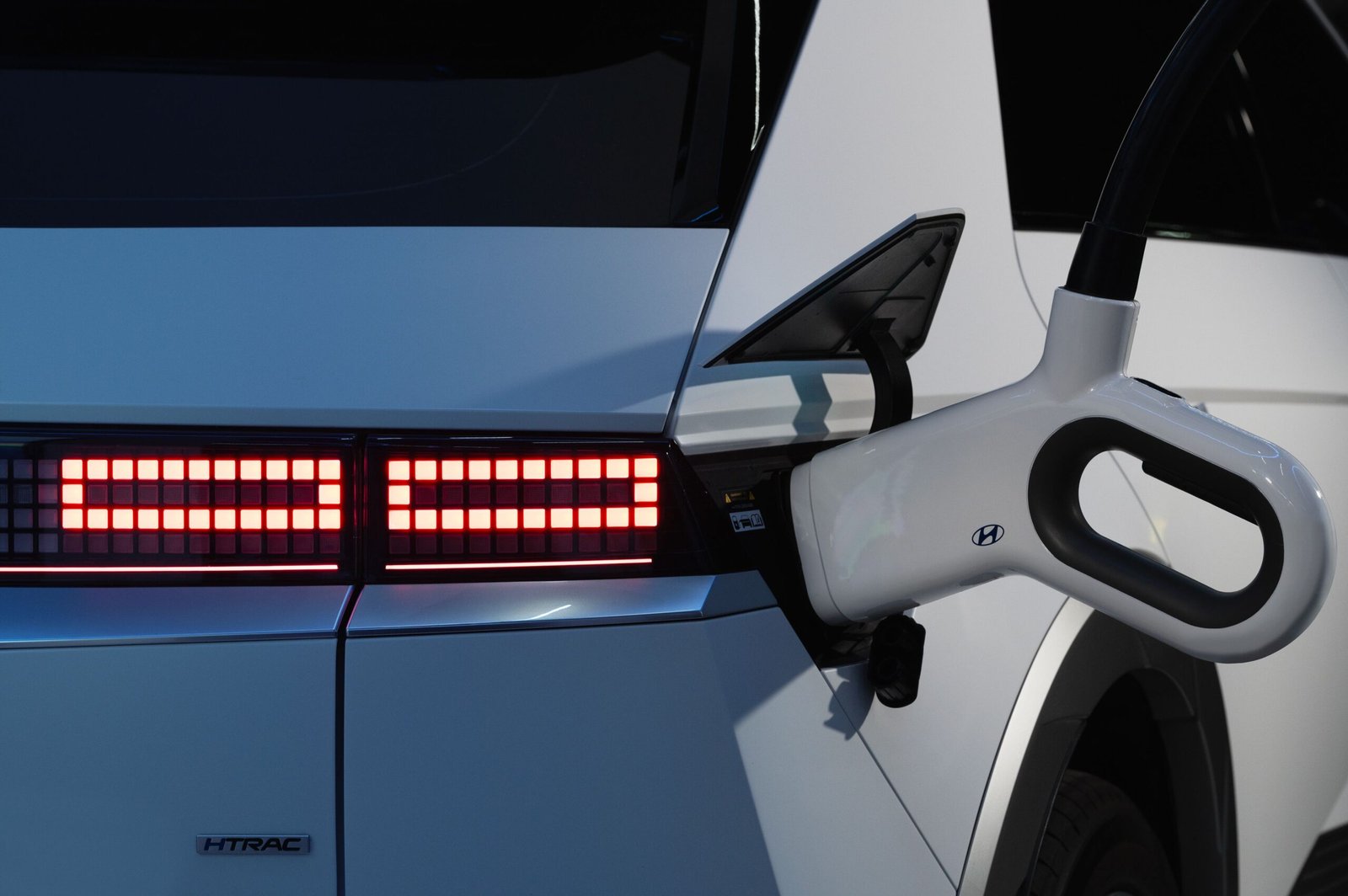
The pixel-style lighting elements are among the easiest ways to identify an Ioniq 5. Hyundai has used this visual theme throughout the vehicle, giving the front and rear lighting a distinctive appearance that separates the model from more conventional electric crossovers. Depending on the market and trim, buyers can also find different wheel designs, exterior colors, bumpers and styling packages. Recent updates have refined the exterior rather than completely changing the basic identity of the vehicle, meaning the Ioniq 5 continues to be recognizable while receiving incremental improvements in technology and practicality. Hyundai India’s 2026 update, for example, includes redesigned front and rear bumpers and updated alloy-wheel designs.

Hyundai Ioniq 5 EV Interior and Space

Inside, the Hyundai Ioniq 5 EV takes advantage of its electric architecture to provide a cabin that feels considerably more spacious than its exterior dimensions might initially suggest. The long wheelbase creates useful passenger space, while the flat floor helps create an open feeling between the front and rear seating areas. The cabin design emphasizes simplicity and technology without relying entirely on a traditional cockpit layout. Depending on the market and specification, the vehicle can feature large digital displays, connected services, wireless smartphone integration, premium audio equipment and a range of convenience features.

The interior is also designed around flexibility. The Ioniq 5 can serve as a daily commuter, family vehicle or long-distance electric crossover, and its rear seating and cargo area are important parts of that versatility. Hyundai has published cargo figures of up to 527 liters behind the rear seats and up to 1,587 liters with the second row folded for the global model. Recent versions also receive technology upgrades, including a 12.3-inch digital instrument display and 12.3-inch navigation display in the Indian-market model, along with connected services and over-the-air updates.

Hyundai Ioniq 5 Battery and Range

Battery range is one of the first things shoppers investigate when considering an electric vehicle, and the Hyundai Ioniq 5 EV offers different range figures depending on the battery, drivetrain, wheels, trim and testing standard used in a particular country. For the 2026 U.S.-market model, Car and Driver reports EPA-estimated range figures from 245 to 318 miles, with the largest 84.0-kWh battery capable of an estimated 318 miles when combined with rear-wheel drive in the appropriate configuration. Dual-motor all-wheel-drive versions generally provide less range because they use additional power and hardware.

International figures can look very different because testing procedures are not identical. Hyundai states that a long-range rear-wheel-drive Ioniq 5 can achieve up to 570 km under the WLTP cycle in certain markets, while the latest Indian version uses an 84 kWh battery and has an ARAI-certified range of up to 690 km. These numbers should not be directly compared with EPA figures as though they were measured using the same test. Real-world range can also be affected by driving speed, temperature, road conditions, climate-control use, wheel configuration, battery condition and driving style.

Hyundai Ioniq 5 Charging Capability

Charging is arguably one of the most important technical strengths of the Hyundai Ioniq 5 EV. Its 800-volt electrical architecture allows it to take advantage of high-power DC fast chargers, and Hyundai says that an Ioniq 5 equipped with the long-range battery can charge from 10 to 80 percent in approximately 18 minutes when connected to a suitable 350 kW DC charging station. The actual charging speed depends on the station, battery temperature, battery state of charge and other conditions, so the advertised maximum should not be interpreted as a constant charging rate throughout the entire session.

The vehicle’s charging flexibility is also significant because Hyundai designed the system to work with both 400-volt and 800-volt charging infrastructure. This means owners are not restricted to a particular voltage architecture when traveling. Home charging is much slower than high-power DC fast charging, but it can be convenient for overnight use, particularly when the owner has access to a suitable home wallbox. In the Australian-market specification for the latest model, Hyundai lists an 84 kWh battery and approximately 10 hours 50 minutes for a 10-to-100-percent charge at a 7 kW AC charger, illustrating the difference between home charging and ultra-fast public charging.

Hyundai Ioniq 5 EV Performance

The Hyundai Ioniq 5 is available with different power outputs, allowing buyers to choose between efficiency-oriented configurations and versions with stronger acceleration. The rear-wheel-drive long-range version in Hyundai’s global specifications produces 168 kW and 350 Nm, while the all-wheel-drive configuration uses two motors and produces a combined 239 kW and 605 Nm in the cited specification. Hyundai lists a 0-to-100 km/h time of 5.3 seconds for that long-range all-wheel-drive version.

The 2026 U.S. model also demonstrates how much the Ioniq 5’s performance can vary according to configuration. Car and Driver lists single-motor versions with 168 or 225 horsepower and dual-motor versions with 320 horsepower. In its testing, a 320-horsepower all-wheel-drive Ioniq 5 reached 60 mph in 4.5 seconds. This combination of instant electric torque and relatively strong acceleration makes the Ioniq 5 more than simply an efficiency-focused commuter vehicle.

Hyundai Ioniq 5 EV Technology

Technology is another major part of the Ioniq 5 experience. Modern versions can include large digital displays, navigation, smartphone connectivity, connected vehicle services and over-the-air updates. Hyundai’s latest Indian-market model, for example, includes a 12.3-inch digital cluster and 12.3-inch ccNC navigation system, along with wireless Android Auto and Apple CarPlay, Bluelink connected-car technology and over-the-air vehicle updates.

The Ioniq 5 also offers technology that is particularly useful because it takes advantage of the vehicle’s battery as an energy source. One of the most interesting features is Vehicle-to-Load, or V2L, which allows the vehicle to provide electrical power to external equipment. Hyundai states that the system can provide up to 3.6 kW in applicable configurations, making it useful for powering items such as camping equipment, electric bicycles, laptops or other devices. The exact equipment and functionality can depend on market specification.

Safety and Driver Assistance

Safety technology is an important consideration for anyone researching the Hyundai Ioniq 5 EV. Depending on the market and trim level, the vehicle can be equipped with systems such as Forward Collision-Avoidance Assist, Blind-Spot Collision-Avoidance Assist, Safe Exit Assist, Intelligent Speed Limit Assist, Highway Driving Assist, Rear Cross-Traffic Collision-Avoidance Assist and parking assistance technologies. Hyundai’s published global information also lists features such as a surround-view monitor and Remote Smart Parking Assist on applicable versions.

As with any driver-assistance system, these technologies should be viewed as aids rather than replacements for an attentive driver. Their availability, operation and names can also differ between markets and trim levels. Buyers should therefore check the equipment list for the exact Ioniq 5 being considered instead of assuming that every feature is standard on every version.

Hyundai Ioniq 5 EV Practicality for Everyday Driving

The Ioniq 5’s combination of passenger space, cargo flexibility, comfortable electric driving and rapid charging makes it suitable for a wide range of everyday uses. For urban driving, the instant response of an electric motor makes acceleration smooth and predictable, while regenerative braking can help reduce the need to use the conventional friction brakes in certain driving situations. For longer trips, the fast-charging capability becomes particularly useful because shorter charging stops can make road trips easier to manage when compatible high-power chargers are available.

At the same time, buyers should consider their own charging environment before purchasing an electric vehicle. Someone with convenient home charging may find EV ownership particularly straightforward because most daily charging can happen while the vehicle is parked overnight. A person who cannot charge at home may need to depend more heavily on public charging infrastructure. Therefore, the Ioniq 5’s impressive fast-charging capability is valuable, but access to reliable charging remains an important part of the overall ownership experience.

Hyundai Ioniq 5 EV Price and Model Availability

The price of the Hyundai Ioniq 5 EV varies significantly according to country, battery, trim and available incentives. In the United States, Car and Driver lists the 2026 Ioniq 5 at approximately $36,650 to $50,625 depending on configuration. Hyundai’s pricing and availability are different in other markets, and the latest Indian-market Ioniq 5 has its own local specifications and pricing structure.

Because EV pricing can change with manufacturer incentives, taxes, import duties, government programs and dealer offers, a buyer should check current local pricing rather than relying on an old article or a price from another country. The same principle applies to charging connectors and equipment. For example, North American and other international versions can have different charging-port standards, so local specifications should always be confirmed before making a purchase decision.

Hyundai Ioniq 5 EV: Main Advantages

The Hyundai Ioniq 5 EV stands out for several reasons. Its distinctive design gives it an identity that is quite different from many conventional crossovers, while its dedicated electric platform creates an unusually spacious cabin for its exterior footprint. Its 800-volt charging system is another major technical advantage, particularly for drivers who frequently travel long distances and have access to suitable high-power DC chargers. The availability of rear-wheel drive and all-wheel drive also gives buyers more choice in balancing efficiency, traction and performance.

Another important advantage is the combination of technology and practicality. Features such as V2L, connected services, digital displays and flexible seating make the Ioniq 5 more than simply a vehicle powered by a large battery. The latest models also benefit from continuing updates to range, battery capacity, charging technology, design and interior equipment, helping the nameplate remain competitive as the electric-car market develops.

Things to Consider Before Buying a Hyundai Ioniq 5 EV

Although the Ioniq 5 has many attractive qualities, buyers should consider more than headline specifications. Actual range can be lower than laboratory estimates, particularly during high-speed highway driving or extreme temperatures. All-wheel-drive versions generally sacrifice some range compared with equivalent rear-wheel-drive models, while larger wheels and certain configurations can also affect efficiency. Public charging performance depends heavily on the charger itself, meaning an advertised 350 kW charging capability does not mean every charging station will deliver that power.

It is also important to compare the exact model year and market. The 2026 Ioniq 5 has received meaningful updates, including a larger battery in applicable versions and changes to charging hardware and equipment. Recent U.S. versions use a NACS charging port, while other markets may use different charging standards. Consequently, online specifications from older Ioniq 5 models should not automatically be applied to the latest vehicle.

Conclusion

The Hyundai Ioniq 5 EV represents Hyundai’s approach to an electric crossover that prioritizes distinctive design, interior space, strong charging technology and everyday usability. Its dedicated electric platform allows the vehicle to provide a spacious cabin and flexible layout, while its 800-volt architecture gives it rapid DC charging capability under suitable conditions. Depending on the market, buyers can choose between different battery sizes and rear-wheel-drive or all-wheel-drive configurations, with range and performance varying accordingly.

For anyone researching an electric vehicle, the Ioniq 5 is worth understanding beyond its headline range number. Charging access, battery size, drivetrain, local pricing, available equipment and real-world driving conditions all influence the ownership experience. With continuing updates to its battery, technology and design, the Hyundai Ioniq 5 EV remains an important model in Hyundai’s electric-vehicle lineup and a strong subject for anyone researching modern electric crossover technology.

Frequently Asked Questions About the Hyundai Ioniq 5 EV

Is the Hyundai Ioniq 5 a fully electric vehicle?

Yes. The Hyundai Ioniq 5 is a battery-electric vehicle and does not use a conventional gasoline engine for propulsion.

What is the Hyundai Ioniq 5 EV range?

Range depends on the model, battery, drivetrain, wheels and testing standard. The 2026 U.S. model has EPA-estimated ranges from 245 to 318 miles, while Hyundai lists different WLTP or local certified figures for other markets.

How fast can the Hyundai Ioniq 5 charge?

With an appropriate high-power DC charger, Hyundai states that applicable long-range Ioniq 5 versions can charge from 10 to 80 percent in about 18 minutes. Charging performance varies according to the charger, battery temperature and other conditions.

Does the Hyundai Ioniq 5 have all-wheel drive?

Yes. All-wheel-drive versions use electric motors on both axles. Rear-wheel-drive versions are also available, depending on the market and trim.

How large is the Hyundai Ioniq 5 battery?

Battery capacity varies by version and market. The latest versions include an 84 kWh battery in several markets, while the U.S. lineup also includes a smaller 63.0 kWh battery configuration.

Does the Hyundai Ioniq 5 support fast charging?

Yes. Its 800-volt architecture is designed for high-speed DC charging and can also work with 400-volt charging infrastructure.

Does the Ioniq 5 have Vehicle-to-Load technology?

Applicable versions support Vehicle-to-Load technology, which can provide electricity for compatible external devices. Hyundai states that the system can provide up to 3.6 kW in applicable configurations.

Is the Hyundai Ioniq 5 suitable for long-distance travel?

It can be used for long-distance travel, but the practicality depends on the vehicle’s range, weather, driving speed and the availability of compatible fast chargers along the route. Its rapid DC charging capability can be particularly useful during road trips.

What makes the Hyundai Ioniq 5 different from other electric SUVs?

Its combination of distinctive styling, a dedicated EV platform, spacious interior, 800-volt charging architecture, multiple powertrain choices and V2L capability gives the Ioniq 5 a distinctive position within Hyundai’s electric lineup.

Continue Reading

Blogs

Macan Electric: Everything You Need to Know About Porsche’s Electric SUV

Published

on

Macan Electric

The Macan Electric represents an important chapter in Porsche’s transition toward electric mobility while retaining the performance-focused character associated with the Macan name. Rather than treating electrification as simply a way to replace a conventional gasoline engine, Porsche developed the electric Macan around a dedicated electric-vehicle architecture, giving the SUV its own approach to performance, efficiency, technology, charging, and packaging. The result is a luxury electric SUV designed to combine everyday usability with the responsive driving experience expected from a Porsche. For buyers considering an electric vehicle but unwilling to give up sporty handling, premium materials, advanced technology, and strong acceleration, the Macan Electric deserves close attention.

The appeal of the Porsche Macan Electric goes beyond its electric powertrain. Its exterior combines familiar Porsche design elements with aerodynamic details associated with modern EVs, while the interior places a strong emphasis on digital displays, connectivity, comfort, and driver-focused controls. Depending on the version, the Macan Electric can also deliver substantial performance, making it relevant not only to people looking for an efficient luxury SUV but also to enthusiasts interested in an electric vehicle capable of providing an engaging driving experience. In this guide, we will explore the Macan Electric in detail, including its design, performance, range, charging technology, interior, practicality, technology, and the factors buyers should consider before choosing one.

What Is the Macan Electric?

The Macan Electric is Porsche’s fully electric interpretation of its popular Macan SUV. It is important to understand that this is not simply a gasoline-powered Macan with its engine removed and an electric motor installed. Porsche developed the electric model using an EV-focused platform, allowing engineers to take advantage of the packaging benefits of an electric drivetrain. The architecture places the battery low in the vehicle, which can contribute to a low center of gravity and help support the handling characteristics expected from a Porsche. Electric motors also provide immediate torque, creating a different response from a traditional combustion-powered SUV.

The Macan Electric SUV is designed for a combination of performance and daily usability. This means it needs to work as a practical premium vehicle for commuting, shopping, road trips, and carrying passengers while also offering the acceleration and handling expected from the Porsche brand. The electric platform gives Porsche the opportunity to optimize several aspects of the vehicle simultaneously, including weight distribution, aerodynamics, interior packaging, and power delivery. For consumers moving from a conventional luxury SUV to an EV, these characteristics make the Macan Electric an especially interesting proposition.

Exterior Design and Styling

One of the most noticeable aspects of the Macan Electric is its exterior design. Porsche has maintained recognizable elements of the Macan family while adapting the shape for an electric powertrain. The front end has a cleaner appearance, and the vehicle incorporates aerodynamic features designed to help manage airflow around the body. Smooth surfaces, carefully shaped lighting elements, and a streamlined roofline give the SUV a modern appearance without abandoning the recognizable Porsche design language.

The proportions are particularly important because the Macan Electric needs to look athletic while still functioning as an SUV. The relatively low and wide stance contributes to its sporty appearance, while the sloping roofline gives it a more performance-oriented profile. Aerodynamics also play an important role in electric vehicles because reducing air resistance can help improve efficiency and driving range. Porsche has therefore integrated aerodynamic thinking into numerous parts of the vehicle rather than treating efficiency as an afterthought.

Macan Electric Performance

Performance is one of the major reasons the Macan Electric attracts attention. Electric motors can deliver torque almost immediately, which creates a very direct response when the driver presses the accelerator. This characteristic can make an electric SUV feel dramatically different from a gasoline-powered vehicle, even when both vehicles produce similar headline power figures. The Macan Electric uses that instant response as part of its overall performance character.

Higher-performance versions are designed to provide particularly strong acceleration, while all-wheel-drive configurations can use electric motors on different axles to manage traction and power delivery. This approach can provide rapid acceleration from a standstill while also supporting stability during spirited driving. The battery’s low position within the chassis can further contribute to the vehicle’s handling by lowering the center of gravity. As a result, the Macan Electric is intended to feel more like a performance vehicle than a conventional tall SUV.

Handling is another important part of the Macan Electric performance story. Porsche has historically placed considerable emphasis on steering response, chassis tuning, braking behavior, and cornering stability, and the electric Macan continues that philosophy. Depending on configuration and equipment, technologies such as electronically controlled suspension systems, rear-axle steering, and advanced torque management can influence the way the vehicle responds to driver inputs. This makes the Macan Electric particularly relevant to drivers who see driving enjoyment as an important part of choosing a luxury SUV.

Macan Electric Range

Range is naturally one of the biggest considerations for anyone researching an electric vehicle. The exact Macan Electric range depends on the specific version, battery configuration, wheel and tire selection, driving conditions, weather, speed, terrain, and other factors. Official testing figures can provide a useful comparison between models, but real-world range can vary considerably because electric vehicles are sensitive to conditions that affect energy consumption.

For everyday driving, range should be considered in the context of a person’s routine rather than as a single maximum number. Someone who primarily drives around a city and has convenient home charging may rarely need to think about the vehicle’s full range. A driver who regularly travels long distances at highway speeds may place greater importance on efficiency and fast charging. This is why potential buyers should consider both the battery capacity and the charging network available along their usual routes.

The Macan Electric also benefits from an aerodynamic body and an EV-specific platform. Porsche has worked to balance performance with efficiency, although driving a powerful electric SUV aggressively will naturally consume more energy than relaxed driving. Cold temperatures, high speeds, heavy loads, steep roads, and extensive use of climate control can also affect real-world range.

Macan Electric Charging Technology

Charging is another major feature of the Porsche Macan Electric. Fast DC charging can significantly reduce the amount of time required to add energy to the battery compared with conventional slower charging methods. This can make long-distance travel more convenient because drivers can use planned charging stops rather than waiting for a battery to become completely full.

Home charging is particularly useful for owners who have access to suitable electrical infrastructure. Instead of visiting a fuel station, an owner can typically plug the vehicle in at home and begin the next day with additional charge. This changes the refueling routine considerably. For many EV owners, the majority of charging can happen while the vehicle is parked overnight or during other periods when the car would otherwise be unused.

The charging experience also depends on the available charger. A high-powered DC fast charger can provide substantially faster charging than a standard household outlet, while the vehicle’s charging system, battery temperature, state of charge, and charger capability all influence actual charging performance. Anyone considering a Macan Electric should therefore evaluate both the vehicle and the charging infrastructure available at home and at frequently visited destinations.

Interior and Cabin Experience

Inside, the Macan Electric interior combines luxury materials with an extensive digital interface. Porsche has embraced modern screens and connectivity while maintaining a driver-oriented layout. The cabin is designed to feel contemporary and premium, with attention given to seating position, visibility, materials, lighting, and the overall arrangement of controls.

The electric architecture can also create opportunities for efficient use of interior space. Because electric motors and other drivetrain components can be packaged differently from a conventional engine and transmission, designers have greater flexibility when planning the cabin and storage areas. The Macan Electric can therefore serve as a practical daily vehicle while retaining the relatively sporty driving position expected from a Porsche SUV.

Technology is a central part of the cabin experience. Depending on specification, drivers can have access to multiple displays, connectivity functions, navigation, multimedia systems, driver-assistance technologies, and other digital features. The exact equipment varies by market and trim, so buyers should check the specification of the particular vehicle they are considering rather than assuming that every feature is standard.

Technology and Connectivity

Modern luxury EV buyers increasingly expect their vehicle to function as an extension of their digital life, and the Macan Electric is designed around that expectation. Its infotainment system provides access to navigation, media, communication, vehicle information, and connected services. Digital displays can also provide information about battery status, energy consumption, charging, driving modes, and other vehicle functions.

One advantage of an EV-focused interface is the amount of information available about energy use. Drivers can monitor consumption and estimate remaining range, while navigation systems can help incorporate charging into longer journeys. These tools can make EV ownership easier, particularly for someone who is new to electric vehicles.

Driver-assistance technology is another important area. Depending on the market and selected equipment, the Macan Electric can be equipped with systems designed to assist with functions such as adaptive cruise control, parking, lane-related tasks, and collision avoidance. These technologies are designed to support the driver rather than replace attention and responsibility behind the wheel.

Comfort and Everyday Practicality

Although performance receives considerable attention, the Macan Electric is still an SUV intended for daily use. A comfortable cabin, usable cargo area, practical seating arrangement, and convenient charging routine are all important to its appeal. The vehicle’s relatively substantial dimensions allow it to provide more everyday utility than a low sports car, while its performance-oriented engineering gives it a distinctly different character from many conventional family SUVs.

For families and professionals, practicality may ultimately be just as important as acceleration. The ability to carry passengers, luggage, shopping, and other everyday items makes the Macan Electric more versatile than a dedicated performance vehicle. The availability of storage areas associated with electric vehicle packaging can also improve overall practicality, although cargo capacity and equipment can vary depending on configuration.

Macan Electric vs. Traditional Luxury SUVs

The Macan Electric occupies an interesting position because it combines characteristics from two categories. On one side, it is a luxury SUV with premium materials, sophisticated technology, comfortable seating, and everyday practicality. On the other side, it is an electric performance vehicle with immediate torque, advanced battery technology, and a low-mounted battery pack.

Compared with a traditional gasoline SUV, the electric Macan offers a quieter powertrain and a different acceleration experience. There is no conventional multi-speed transmission shifting through gears in the same way as a gasoline-powered vehicle, and the delivery of torque can feel exceptionally immediate. On the other hand, EV ownership requires drivers to think about charging rather than conventional refueling, which may require some adjustment.

Compared with other electric SUVs, the Macan Electric emphasizes Porsche’s approach to chassis tuning and performance. Buyers therefore need to consider more than battery capacity or acceleration figures. Steering feel, ride quality, suspension tuning, braking behavior, interior design, technology, and brand preferences can all influence the ownership experience.

Is the Macan Electric Good for Long Trips?

The Macan Electric can be used for long-distance travel, but successful EV road trips require more planning than simply stopping at a fuel station. Drivers should understand their expected range, identify compatible fast chargers along the route, and consider alternative charging locations in case a particular station is unavailable or occupied.

The vehicle’s fast-charging capability can make longer journeys considerably more practical. Charging stops can also be integrated into normal travel routines, such as taking a break for food or coffee. However, highway speed, temperature, road conditions, passenger load, and climate-control use can affect energy consumption. Drivers should therefore avoid treating a laboratory or official range figure as a guaranteed distance in every situation.

Macan Electric Price and Ownership Considerations

The Macan Electric price varies according to market, model version, options, taxes, incentives, and dealer pricing. Porsche also offers a broad selection of optional equipment, meaning that the final cost of a highly customized vehicle can differ substantially from its starting price.

Ownership costs should also be considered beyond the purchase price. Electric vehicles generally have fewer conventional powertrain components requiring routine maintenance because they do not use an internal-combustion engine with components such as spark plugs, engine oil, and traditional exhaust-system hardware. However, EVs still require tire maintenance, brake-system inspections, suspension servicing, software updates, and other routine care.

Battery condition is naturally an important consideration for any used electric vehicle. Prospective buyers of a used Macan Electric should examine the vehicle’s service history, charging behavior, battery condition information when available, warranty coverage, and overall mechanical condition. A professional inspection can be especially useful when purchasing a used premium EV.

Who Should Consider the Macan Electric?

The Macan Electric may appeal to drivers who want the practicality of an SUV but also want an electric powertrain and a strong focus on driving performance. It can be particularly interesting for someone who has already decided to move toward EV ownership but does not want to sacrifice the premium design and performance associated with a luxury vehicle.

It is also worth considering for buyers who have convenient access to charging. Home charging can make the ownership experience much easier because the vehicle can replenish energy while parked. Drivers without reliable home or workplace charging may need to depend more heavily on public charging infrastructure, which can make the ownership routine different.

Ultimately, the suitability of the Macan Electric depends on individual driving habits, charging access, budget, desired performance, passenger needs, and preferences regarding electric versus gasoline powertrains. There is no single specification that makes the vehicle ideal for every driver, so researching the exact version and equipment package is important.

Conclusion

The Macan Electric brings together several qualities that have become increasingly important in the luxury automotive market: electrification, performance, advanced technology, premium design, and everyday SUV practicality. Porsche’s approach is not simply about replacing a combustion engine with batteries and motors; the electric Macan is built around an EV architecture that allows the company to rethink packaging, weight distribution, aerodynamics, power delivery, and chassis behavior.

For potential buyers, the most important areas to investigate are range, charging availability, performance, interior equipment, pricing, and long-term ownership requirements. The exact experience can vary depending on model version and optional equipment, so comparing specifications carefully is essential. For drivers looking for an electric SUV that combines everyday versatility with a distinctly performance-oriented character, the Porsche Macan Electric provides a compelling example of how luxury SUVs are evolving in the electric era.

Frequently Asked Questions About Macan Electric

What is the Macan Electric?

The Macan Electric is Porsche’s fully electric SUV based on an EV-focused architecture. It combines electric propulsion with Porsche-oriented performance, luxury, technology, and SUV practicality.

Is the Porsche Macan Electric fully electric?

Yes. The Macan Electric uses a battery-electric powertrain rather than a conventional gasoline engine.

How far can the Macan Electric travel on a charge?

The exact range depends on the specific Macan Electric version and testing standard. Real-world range can also vary with speed, temperature, terrain, wheel and tire configuration, passenger load, and climate-control use.

How fast does the Macan Electric charge?

Charging speed depends on the vehicle configuration, charger capability, battery temperature, and state of charge. DC fast charging can replenish the battery significantly faster than conventional household charging.

Does the Macan Electric have all-wheel drive?

Certain Macan Electric versions use dual electric motors and all-wheel drive. Availability depends on the specific model and market.

Is the Macan Electric suitable for families?

It can be. The Macan Electric combines SUV practicality with a premium interior, passenger seating, storage space, and electric performance, although exact space and equipment depend on configuration.

Is the Macan Electric expensive?

It is positioned as a premium luxury SUV, and pricing varies by market, version, options, taxes, and incentives. Optional equipment can significantly affect the final purchase price.

What makes the Macan Electric different from other EVs?

A major distinction is Porsche’s emphasis on performance-oriented chassis tuning, driving dynamics, premium design, and technology. The vehicle is designed to function as both a luxury SUV and a performance-focused electric vehicle.

Is the Macan Electric good for road trips?

It can be used for long-distance travel, particularly when fast-charging infrastructure is available along the route. Planning charging stops and accounting for real-world factors that affect range are important for longer journeys.

Should I buy a Macan Electric or a gasoline SUV?

That depends on individual priorities. Buyers should compare charging access, driving habits, range requirements, purchase price, performance preferences, maintenance expectations, and the availability of suitable charging infrastructure before making a decision.

Continue Reading

Trending